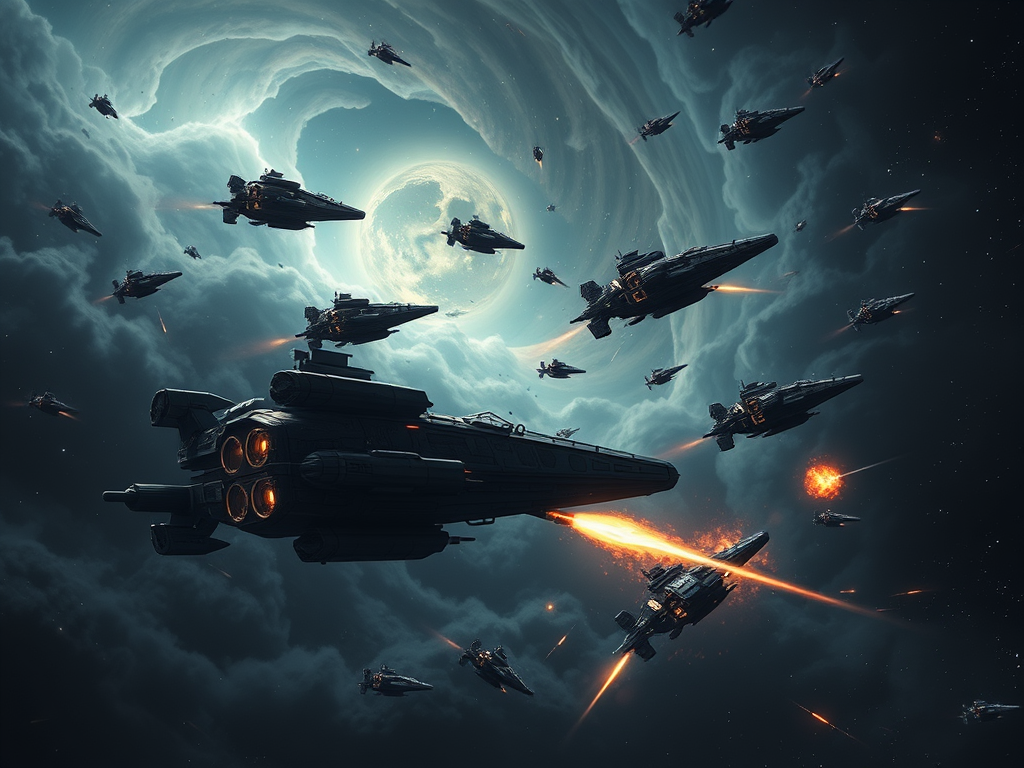
Because sometimes you need spaceships, moral ambiguity, and characters who make deeply questionable decisions—preferably while everything’s on fire.
Look, I get it. Winter hits and suddenly you want books that match the vibe: dark, complex, a little bit brutal. The kind of stories where nobody’s hands are clean, the politics are messy, and “saving the day” might just mean choosing which terrible option screws over the fewest people. If you’re tired of squeaky-clean space adventures where the good guys always win and nobody ever has to make an impossible choice, this winter reading list sci-fi edition is for you. These are adult space opera series (and a couple standalones) that understand the universe is vast, beautiful, and absolutely will not care if you live or die. They’re sprawling, they’re intense, and yes, they’re exactly the kind of gritty space opera that’ll keep you up way past your bedtime because you have to know what happens next. Whether you’re looking for military space opera recommendations with tactical brilliance, dark science fiction books with serious philosophical weight, or just some of the best books to read when you want your space battles served with a side of existential dread—I’ve got you covered. So grab your favorite blanket, maybe some comfort snacks, and settle in for some space opera series to binge that’ll make you feel things.
1. Leviathan Wakes — James S. A. Corey (The Expanse, Book 1)

Let’s start with the obvious one, shall we? If you haven’t read Leviathan Wakes yet, this is your entry point to one of the most satisfying space opera like The Expanse—because, well, it is The Expanse. This is humanity a few hundred years in the future, spread across the solar system and already making a mess of things with corporate greed, political tension between Earth, Mars, and the Belt, and the kind of noir detective story that would make Raymond Chandler proud. James Holden is an idealistic ship captain who keeps stumbling into galaxy-altering problems, while Detective Miller is hunting a missing girl through the grimy corridors of Ceres Station. When their paths cross, things get weird, then dangerous, then apocalyptic. The genius here is how grounded it all feels—the physics mostly work, space is hard, and people are still just people, petty and broken and trying their best. It’s the first book in a nine-book series that never loses steam, and it absolutely earns its place on any gritty space opera list. Fair warning: once you start, you won’t want to stop.
2. Ninefox Gambit — Yoon Ha Lee (The Machineries of Empire, Book 1)
Okay, so you want weird? You want dense? You want a space opera that’ll make you work for it but reward you with one of the most inventive universes in recent science fiction? Ninefox Gambit is that book. Yoon Ha Lee drops you into the Hexarchate, a empire where math and belief shape reality, and where heresy—literally deviating from the calendar system—is a capital offense. Our protagonist, Captain Kel Cheris, is a talented but unremarkable soldier until she gets paired with the ghost of a notorious traitor general, Shuos Jedao, to take down a heretical fortress. Jedao has never lost a battle. He’s also completely insane and once murdered his own army. The plot is a brilliant military puzzle wrapped in layers of political intrigue, and the worldbuilding is so complex you’ll probably need to reread sections—but in the best way. It’s not an easy read, but if you want something that treats you like an intelligent reader and doesn’t hold your hand, this is it. First in a trilogy.

3. Velocity Weapon — Megan E. O’Keefe (The Protectorate, Book 1)

Velocity Weapon is what happens when you take a propulsive military SF setup and twist it with unreliable narrators, AI shenanigans, and a mystery that’ll keep you guessing. Sanda Greeve wakes up from what she thinks was a battle that knocked her unconscious, only to find she’s been in a cryopod for centuries, her entire civilization is supposedly dead, and the only company she has is the AI of an enemy warship. Meanwhile, her brother Biran is navigating political intrigue back home that’s very much in the present timeline. The dual narrative keeps you on your toes, and O’Keefe is mean to her characters in the most satisfying way—nobody gets an easy path, and the reveals genuinely surprised me. It’s got that perfect balance of heart-pounding action and “wait, WHAT?” plot twists. Plus, the AI character is legitimately unsettling in all the right ways. First in a trilogy that gets progressively wilder.
4. Revenger — Alastair Reynolds (Revenger, Book 1)
Alastair Reynolds doing YA-ish space opera shouldn’t work as well as it does, but Revenger is a blast. Set in the far future where humanity lives in a shattered solar system full of artificial habitats and ancient treasures, two sisters sign on as crew to a “sunjammer” ship hunting for alien artifacts in baubles—mysterious spheres that open only at certain times. When they’re betrayed and separated, the younger sister Arafura has to become someone harder, colder, and far more dangerous to survive and find her sister. It’s got that classic revenge narrative, but Reynolds fills it with his trademark weird science, morally questionable choices, and a protagonist who realizes too late that becoming a monster might have been the only way to win. The voice is sharp, the pacing is relentless, and the worldbuilding is strange in that particularly Reynoldsian way. First in a trilogy, and each book gets progressively darker.

5. Empire of Silence — Christopher Ruocchio (The Sun Eater, Book 1)

If you want your space opera with a literary, epic feel—something that reads like Dune met The Name of the Wind in a grimdark future—Empire of Silence is your book. It’s framed as the memoir of Hadrian Marlowe, a man who will eventually become known as both a hero and a genocidal monster, and the first book covers his youth: running away from his noble family to avoid becoming a priest, ending up sold into slavery, fighting in gladiatorial arenas, and slowly finding his way toward the galactic conflict that will define him. Ruocchio’s prose is gorgeous and occasionally indulgent (this is a LONG book), but it’s also got genuine emotional depth and some fascinating worldbuilding about a humanity that’s regressed into feudalism among the stars. Yes, it’s got that “unreliable narrator looking back on his life” thing going on, but it works. First in a series that’s still ongoing, and it’s definitely a commitment, but if you want something meaty to sink into, this delivers.
6. Embers of War — Gareth L. Powell (Embers of War, Book 1)
Embers of War feels like someone asked “what if your spaceship had PTSD?” and then built an entire novel around the emotional weight of that question. The Trouble Dog is a sentient warship who’s done terrible things in a genocide and now works as a rescue ship, trying to atone. Her captain, Sal Konstanz, is also running from her past. When a passenger ship goes missing in a dangerous nebula, the rescue mission becomes something far more complicated, involving alien ruins, war crimes, and the question of whether redemption is even possible. Powell balances breakneck action with genuine emotional stakes, and the ensemble cast actually feels like real people dealing with trauma, not just action figures. It’s also got some of the best space battle sequences I’ve read in years—visceral and chaotic in all the right ways. First in a trilogy, but each book works pretty well as a standalone if you want to just sample one.

7. The Praxis — Walter Jon Williams (Dread Empire’s Fall, Book 1)

Here’s an underrated space opera books entry that deserves way more attention than it gets. The Praxis is set in an empire held together by the iron grip of the alien Shaa, who’ve ruled for thousands of years with an ideology called the Praxis—basically “this is how things are, deviate and die.” When the last Shaa dies, the empire starts to crack, and humanity is caught in the middle of a brewing civil war. Williams gives us multiple POV characters navigating military hierarchies, political schemes, and the messy reality that maybe the old order was terrible but the new chaos might be worse. It’s got a lot of Honor Harrington energy but with more moral ambiguity and less of the “noble captain is always right” vibe. The space battles are tactical and detailed, the politics are genuinely complex, and the characters make mistakes that actually matter. First in a trilogy that sticks the landing.
8. Warchild — Karin Lowachee (Warchild, Book 1)
This is the deep cut, the one that not enough people have read, and it’s devastating in the best way. Jos Musey is eight years old when his merchant ship is attacked by pirates. He’s taken captive by the infamous pirate captain Falcone, eventually rescued by the alien striviirc-na, and then sent back to human space where he’s recruited as a teenage spy. That’s a lot of trauma for one kid, and Lowachee doesn’t shy away from the psychological cost. This is a book about child soldiers, about what war does to people, and about how cycles of violence perpetuate themselves. It’s dark—really dark—and some readers will find it tough going, but it’s also brilliantly written and emotionally honest in a way that a lot of military SF isn’t. Jos is a fascinating, damaged protagonist, and watching him try to navigate impossible loyalties is genuinely gripping. Technically first in a trilogy, but each book is pretty standalone and follows different characters in the same universe.

9. The Stars Are Legion — Kameron Hurley (Standalone)
And now for something completely different. The Stars Are Legion is Hurley at her most gonzo: an all-female cast living on massive, organic worldships that are literally alive—and dying. Our protagonist, Zan, wakes up with no memory on a ship called the Katazyrna, and she’s told she’s the only one who can save their world by traveling to the center of the Legion and figuring out how to fix the dying ships. But nothing is as it seems, loyalties shift constantly, and the body horror/biological weirdness is turned up to eleven. This is weird, gross, violent, and absolutely mesmerizing. Hurley’s imagination is unmatched—the worldships birth their components, people climb through organs and mechanical systems that blur into biology, and the whole thing has this fever-dream quality that’s unlike anything else on this list. It’s also a standalone, which is rare for space opera, so you can dive in and get the full story without committing to a series. Fair warning: this is not for everyone, but if you want something that’ll stick in your brain long after you finish it, this is the one.

So there you have it—nine best books to read when you want your space opera served cold, morally complicated, and absolutely riveting. Whether you’re looking for tactical military brilliance, psychological depth, or just some good old-fashioned “everything is terrible and somehow that makes it more interesting” energy, these books deliver. They’re perfect for those long winter nights when you want to disappear into another universe—preferably one where the problems are galaxy-sized and your own life feels manageable by comparison.
If you’re hungry for more recommendations like this (and let’s be real, you probably are), sign up for my mailing list. I send out monthly book recs, reading updates, and the occasional rant about why certain books deserve more love. No spam, just a fellow book nerd sharing what’s worth your time.
Now go forth and get reading. Your TBR pile isn’t going to stress you out by itself.
A quick note: This blog is supported by Amazon affiliate links. If you click through and buy any of these books, I get a small commission at no extra cost to you—it just helps keep the blog running and lets me keep reading and recommending books. I only recommend books I genuinely think are worth your time.