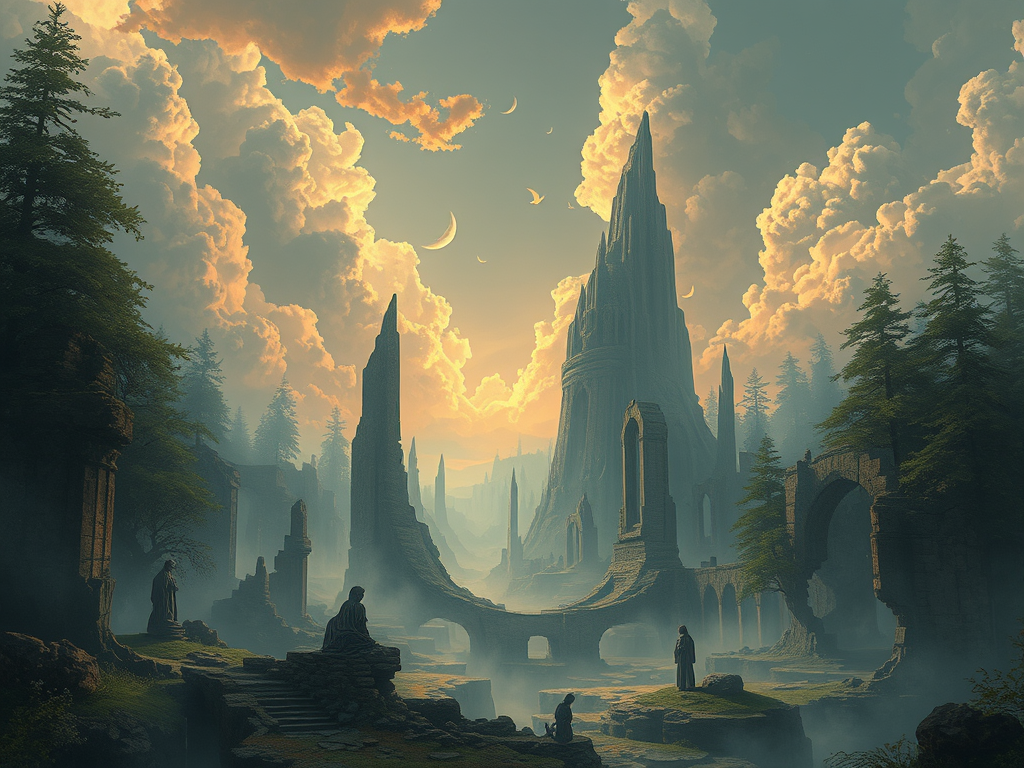
Some stories don’t fade — they just wait for us to remember them. These are the worlds that deserved better: the books that whispered instead of shouting, that built cathedrals of feeling long before algorithms started measuring engagement. Between 1990 and 2010, fantasy was quietly busy breaking hearts and re-inventing wonder, and most of us missed it.
If you crave book hangover reads, if you long for fantasy worlds that linger, if you’re chasing that old-school sense of awe, here are eight novels that still deserve you.
1. The Curse of Chalion — Lois McMaster Bujold (2001)

Faith and fatigue walk hand in hand in Bujold’s quietly revolutionary fantasy. It’s a story about a weary soldier, divine politics, and the strange mercy of forgiveness. But beneath the miracles, the heart of the book is about emotional resonance in fiction — how belief can bruise as much as it heals.
Bujold doesn’t sermonize; she listens. Her gods are capricious, her characters painfully human, and her prose soft as confession. This is emotional worldbuilding at its finest: a theology you can feel in your bones.
2. Tigana — Guy Gavriel Kay (1990)
Few authors understand why stories endure quite like Guy Gavriel Kay. Tigana is his elegy for memory itself — a country erased from history and the people who refuse to forget it.
It’s a novel that wrecks quietly, not loudly. Every page hums with longing for language, for belonging, for a home that no longer exists. If you’ve ever felt haunted by the sense that beauty and sorrow are twins, this is your pilgrimage.
Emotional payoff: Recognition. The ache of remembering what the world has chosen to forget.

3. The Lions of Al-Rassan — Guy Gavriel Kay (1995)

Yes, another Kay, because sometimes the right heartbreak comes in pairs. The Lions of Al-Rassan turns medieval Spain into myth — a world of divided faiths, impossible loyalties, and love that survives understanding.
The book’s political intrigue and romance intertwine so completely that readers experience grief as geography. The cities burn, but the friendships hurt more. It’s a perfect example of fantasy worlds that linger: places that feel real enough to mourn when the last page closes.
Emotional payoff: Awe and grief held in the same breath.
4. The Speed of Dark — Elizabeth Moon (2002)
Moon’s Hugo-winning novel isn’t fantasy in the dragons-and-swords sense; it’s speculative fiction in the truest, most human one. Told from the perspective of an autistic man offered a “cure,” it’s a meditation on identity, dignity, and choice.
It’s the kind of book hangover read that sneaks up on you — quietly profound, compassionate, devastating in its restraint. Readers often describe closing it and sitting still for minutes, just existing in the space it leaves behind.
Emotional payoff: Empathy sharpened into understanding. The stillness after revelation.

5. The Scar — China Miéville (2002)

Some worlds make you weep; this one makes you gasp. Miéville’s Bas-Lag universe is grotesque, lush, and thrillingly alien. The Scar follows a scholar exiled to a floating city built from pirate ships, where obsession becomes a compass and wonder curdles into dread.
It’s the dark heart of nostalgic fantasy — the kind that reminds you not every story is supposed to comfort you. Miéville’s emotional worldbuilding is viscous and strange, a love letter to transformation.
Emotional payoff: The thrill of awe. The reminder that beauty can be monstrous.
6. The Forgotten Beasts of Eld — Patricia A. McKillip (reissued 2000s)
McKillip’s work feels like standing in a dream half-remembered. The Forgotten Beasts of Eld may predate the others, but its re-emergence in the 2000s found a new audience of readers who wanted grace over grit.
Her prose glimmers with mythic restraint. The heroine, Sybel, commands legendary creatures but struggles to command her own heart. Reading it feels like rediscovering where fantasy learned tenderness.
Emotional payoff: Solitude, softened. The discovery that power and vulnerability can coexist.

7. The Orphan’s Tales: In the Night Garden — Catherynne M. Valente (2006)

Valente doesn’t write novels so much as she orchestrates them. The Orphan’s Tales is a book inside a book inside a thousand aching confessions. It’s what happens when storytelling itself becomes a religion.
For readers who crave fantasy worlds that linger, Valente’s nested myths deliver abundance: sorrow, wonder, sensuality, redemption. It’s overwhelming in the best possible way — the literary equivalent of being sung to by the universe.
Emotional payoff: Ecstasy through narrative. The joy of being lost and found in language.
8. Tooth and Claw — Jo Walton (2003)
End on something bright but earned. Walton’s dragons behave like Victorian nobles — polite, ambitious, and occasionally murderous. It’s witty, satirical, and surprisingly moving.
What begins as social commentary on inheritance law ends as a meditation on dignity and empathy. It’s a sly, satisfying close to this list — a reminder that even comedy can deliver emotional resonance in fiction.
Emotional payoff: Catharsis through wit. Laughter as proof of survival.

Why These Stories Still Work
These aren’t relics. They’re mirrors polished by time.
Each of them proves that emotional worldbuilding isn’t a trend — it’s the foundation of why we read fantasy at all. They leave behind fantasy worlds that linger, and when we return to them years later, they still know our names.
Modern readers who grew up on fast-paced romantasy or cinematic worldbuilding might find these slower, richer, and stranger — but that’s the gift. They remind us what fiction can do when it trusts the reader to feel.
If you’re chasing forgotten fantasy gems, looking for underrated fantasy novels, or just searching for stories that hum in your bloodstream long after the last page, start here.
These are the quiet masterpieces that built the emotional DNA of the genre — proof that sometimes the past remembers us better than the present does.
A quick note: This blog is supported by Amazon affiliate links. If you click through and buy any of these books, I get a small commission at no extra cost to you—it just helps keep the blog running and lets me keep reading and recommending books. I only recommend books I genuinely think are worth your time.